
I am Not Unmarried
Reclaiming Being Single as a Liturgy for Redeeming the Present

Today is Valentine’s Day, in case you didn’t know. Tomorrow is (unofficially) Singles Awareness Day, a would-be holiday the Internet created with wholesome intent while seemingly oblivious to its…unfortunate… acronym. I bring this up because yes, I’m deliberately publishing a post on singleness today instead of tomorrow. What I’ve written here about my relationship to my singleness can also be said of my relationship to this holiday: both have commonly held a lot of baggage for me, and both are also things I feel differently about now than I once did. So here we are. Welcome to the hopeless/hopeful romantic side of the wilderness.
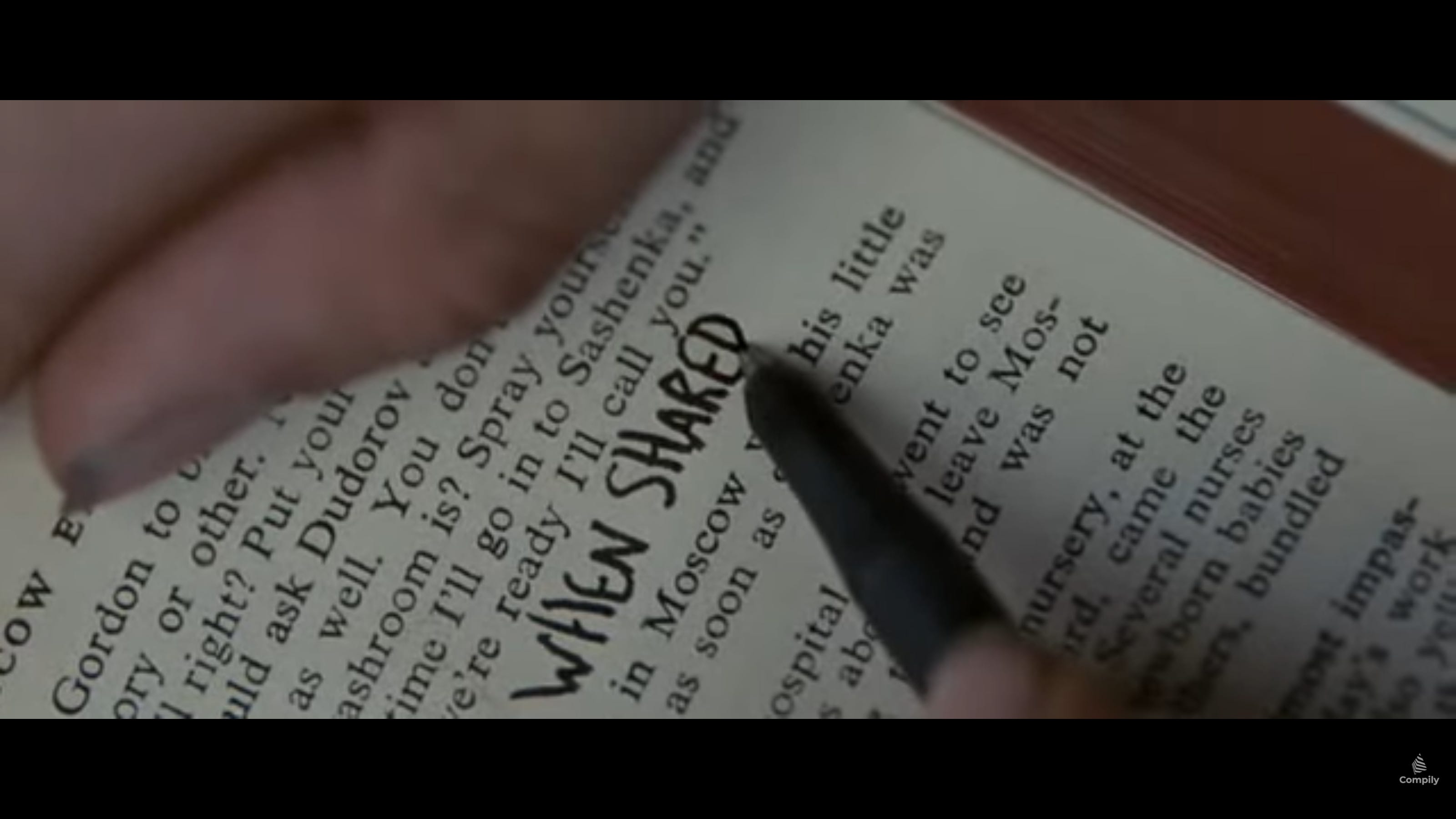
Being single, as the kids would say, “hits different” in my 30s than it did in my 20s. Despite the many things I’ve desired off-and-on since my teens (a list that includes tattoos, a camper van, and backyard chickens), the desire for marriage has been consistent for basically as long as I can remember. And I should clarify that I don’t just mean to get married, but marriage — a life lived and shaped alongside and with another person, because as Alexander Supertramp realized in Into the Wild, “happiness is only real when shared.”
I suspect it’s the endurance of this desire for marriage that – until recently – has led me to refer to myself as “unmarried.” I once saw it as a term that signaled both my current state and future intent, and that’s still true. But the more interested I become in fully inhabiting and embodying the present while letting the future arrive in its own timing, the more I think that the term “unmarried” somehow deprives the present of its dignity, and also misses something crucial about singleness.
The Gift (and Grief) of Singleness
It has historically been hard for me to say I’m “single,” maybe out of fear that identifying with the term too much will make the identity permanent. This is probably clouded by the way I’ve typically observed the church’s treatment of singles, whether deliberate or not.
It’s no secret that the church can be a hard place for singles to feel like they belong, and I know plenty of people who can personally attest to this. Even the most well-meaning “singles ministries” seem to fumble the bag on how exactly they should interact with their intended audience.1 I’m sure there are other variations on this, but so far I’ve really only seen three primary themes for church-sponsored groupings of single people:
Weirdly juvenile activities that make me feel like singles, no matter their age, are somehow perceived as not even fully adult yet. I’m all for getting in touch with my inner child, but are you seriously asking me to go play hide-and-seek on a playground with other 20-and-30 somethings? (Based on a true story.)
Over-programmed messaging about preparing for and anticipating marriage, which both treats singleness primarily as a staging environment for marriage, and also suggests that marriage is the “next level” of spiritual maturity after singleness, neither of which seem true to me.
Doing an Uno-reverse on the previous list item in the interest of “not making marriage an idol,” but course-correcting so hard that it almost becomes suspect when someone joins the singles group with the express intention of finding a mate. After all, if too many singles marry other singles in the singles ministry, what happens to the singles ministry??
Yes, I’ll admit this is mostly a reflection of my personal experience, and yes, I know I’m on the Internet griping about people imperfectly trying but trying nonetheless to address a complex problem in a complex time, and no, I don’t have any better ideas. I join the ranks of those slumped in their recliners, criticizing how bad everything is while offering no solutions. But for these reasons and more, I have not been eager to claim the name of “single” for myself.
I’m not sure if she was the first to say it, but I’ll credit Lore Wilbert for this realization: we are not all guaranteed marriage, but we will all at some point be single, and some of us for longer than we had hoped or would prefer. Lately, I even question the idea that the presence of the desire is a guarantee of the desire’s eventual fulfillment.2 A well-meaning counselor told me that my desire for marriage is a pretty clear sign that I don’t have “the gift of singleness,” i.e. a spiritual calling to a life of dedicated singleness unburdened by any significant need for a partner. On those premises, I agreed with him easily, but I disagreed with his conclusion that therefore I will “almost certainly marry someday.” I’ve seen enough to know those two things do not necessarily proceed from each other. I know of many good and faithful people who desire marriage, living active lives of presence in their community and service to others, nurturing a variety of relationships across demographics, all while their singleness persists.
In other words, these are single people who are out there living the life in front of them,3 not sitting around pining for a spouse, and they nonetheless watch the years roll by with their deep and quiet longing unmet. Indeed, a late uncle of mine ultimately lived his entire life this way, departing this life as a single man, yet going to his rest hoping in something far more certain than finding a wife: the resurrection of the dead, everything sad coming untrue, restored to its fullness in the life of the age to come.
Like my uncle, my life of singleness mirrors my life of faith. In both, I am walking a road of What Is in anticipation of what is Yet To Be. Both of them are proving grounds for my belief that a rich desire and hope for what will eventually be can coexist with a full commitment to the place where those desires and hopes remain unrealized. I don’t want to be so focused on what I want to become that I completely lose sight of the value to be gained from what I currently am. And if I’m truly going to say what I am, I want it to be a full-stop statement rather than hinge on a future yet to be realized – and therefore, ultimately, identify me by what I am not.
In other words, I need to practice being in the present.
The Redemptive Power of Staying Put
I don’t know what it is about February, but for the last two years, it’s the month that has found me – for different reasons – wading through the impenetrable mire of grief over some kind of loss. Last year in particular, the idea of dying from a broken heart seemed less like a poetic device and more like an imminent possibility for me. Even as I held the grim assurance that the only way out was through, I wanted nothing more than to somehow bypass it and find an immediate way out of my circumstances. It’s not often that the cry of my heart is the chorus of a Rise Against song, in this case Tim McIlrath’s raspy declaration of, “Destination: anywhere but here.” The absolute last thing I wanted was to be told that staying put was what I most needed to do.
So of course, that was the exact message I received (providentially but no less aggravatingly) when that very same February, my church small group started reading a peculiar and beautiful little book called Time and Despondency. The book essentially made the case that much of our spiritual malaise stems from our inability to stay in the present moment. Our anxieties come from fixating on the future, our ennui comes from dwelling on the past (and thankfully, the author did draw a distinction between spiritual maladies and actual medical conditions like anxiety and depression). The solution the author put forth centered on learning to dwell in and embody the present moment, even (perhaps especially) when it was painful. Doing this, she asserted, was a way to encounter God, since God is not only in but is the eternal present.
I’ve been on this whole beat about sanctifying time for almost a decade now, and it can largely be traced back to my discovery of another book called Every Moment Holy. Though it’s grown into a bona fide series with an audiobook, an app, and all manner of spinoffs, at one point it was a single leather-bound volume of liturgies for a broad array of everyday occurrences — many of which it might otherwise be hard to think of as “holy.” If you’re fortunate enough to meet the author, Doug McKelvey, and he agrees to sign your copy of the book, he might include a little inscription alongside his signature: “This moment also.”
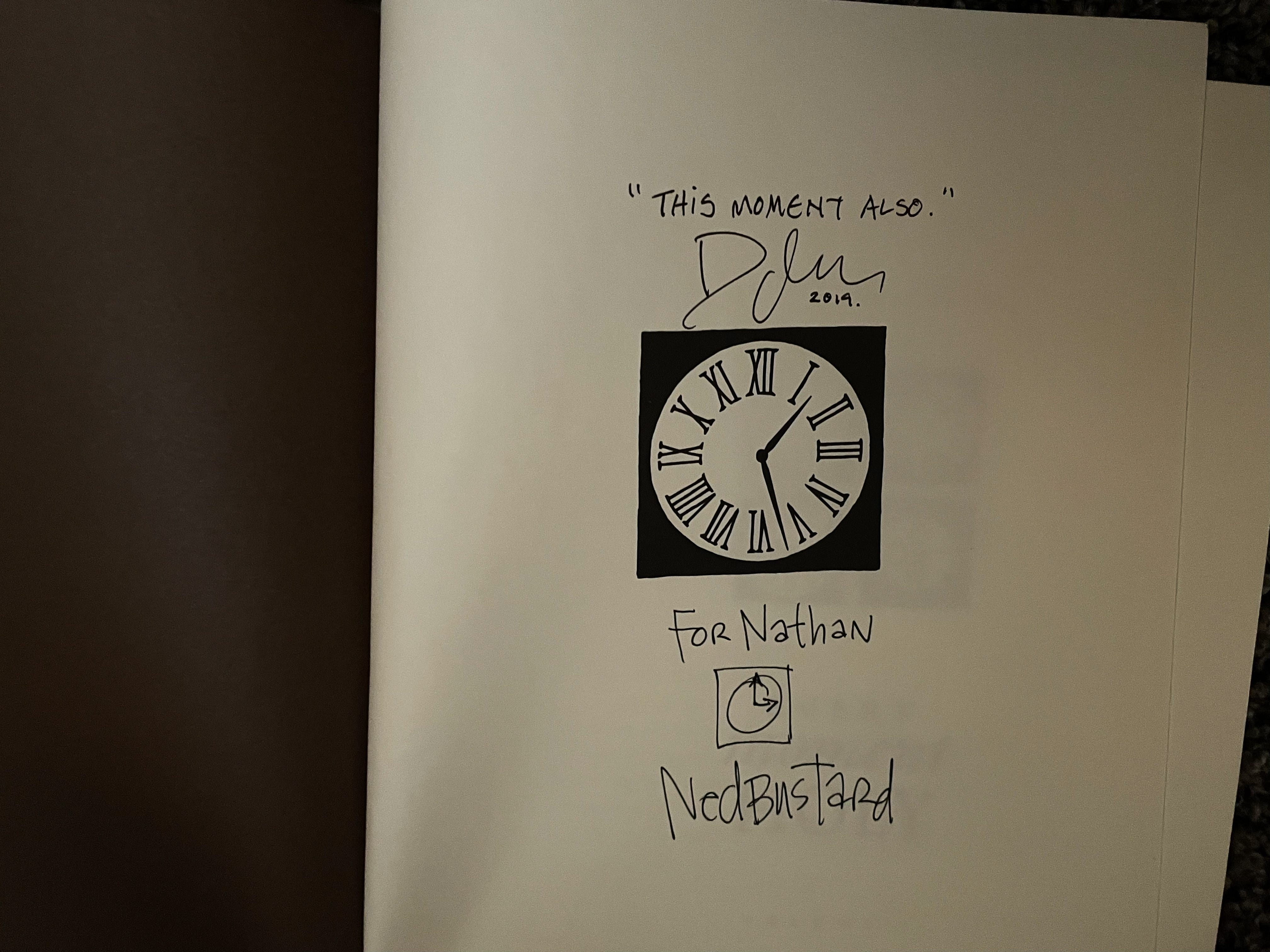
Every moment, including this one, is a thing shot through with holiness. Liturgy is not just a thing that happens in church on Sunday but is a framework for how we live. Life, in other words, is liturgy.
If that is true, that the present moment is not a thing to be feared or escaped from, but embraced and inhabited, the better to experience its fullness and therefore its holiness, then what does it mean to be fully in it?
What does being “fully single” mean, even when singleness is sometimes a place where I’d rather not be, a stage I’d prefer to hurry through in favor of what comes after it?
I think in part it means recognizing that a new name may not be fully ours until we’ve finished the story of the old name. In this great age of our self-written destinies, we’d rather bestow names on ourselves, but there’s something powerful at work when they’re bestowed upon us instead, especially as signifiers of a turning point in our story. This happens all over the place in the Bible: Jacob became Israel. Simon became Peter. Saul became Paul. The name changed as a marker of one story ending and another beginning.
I recognize that being married is more than just being able to call myself “married.” Likewise, I know that (at least traditionally) the literal name change that often comes with marriage is more what I would offer to someone else; it’s hard to think of a more potent way to say “All that is mine is yours” than to surrender sole ownership of even my own name, the one thing that’s been mine from the moment I came into the world. Take my name and I truly have nothing left to give. You’ve got it all.
Maybe what I’m trying to say is, before I can be fully someone else’s, I must be fully myself. This, I think, is the greatest gift of singleness. More than just a waiting room for marriage, it is a station rich with opportunity for meaning-making, for increasing the breadth and depth of many different relationships, and for deepening practices of faith and devotion to God with a (literally) single-minded pursuit. If I am to wait, may it be an active waiting. Whenever and however I am to be found, may I be found busy with this kind of work in the fields.
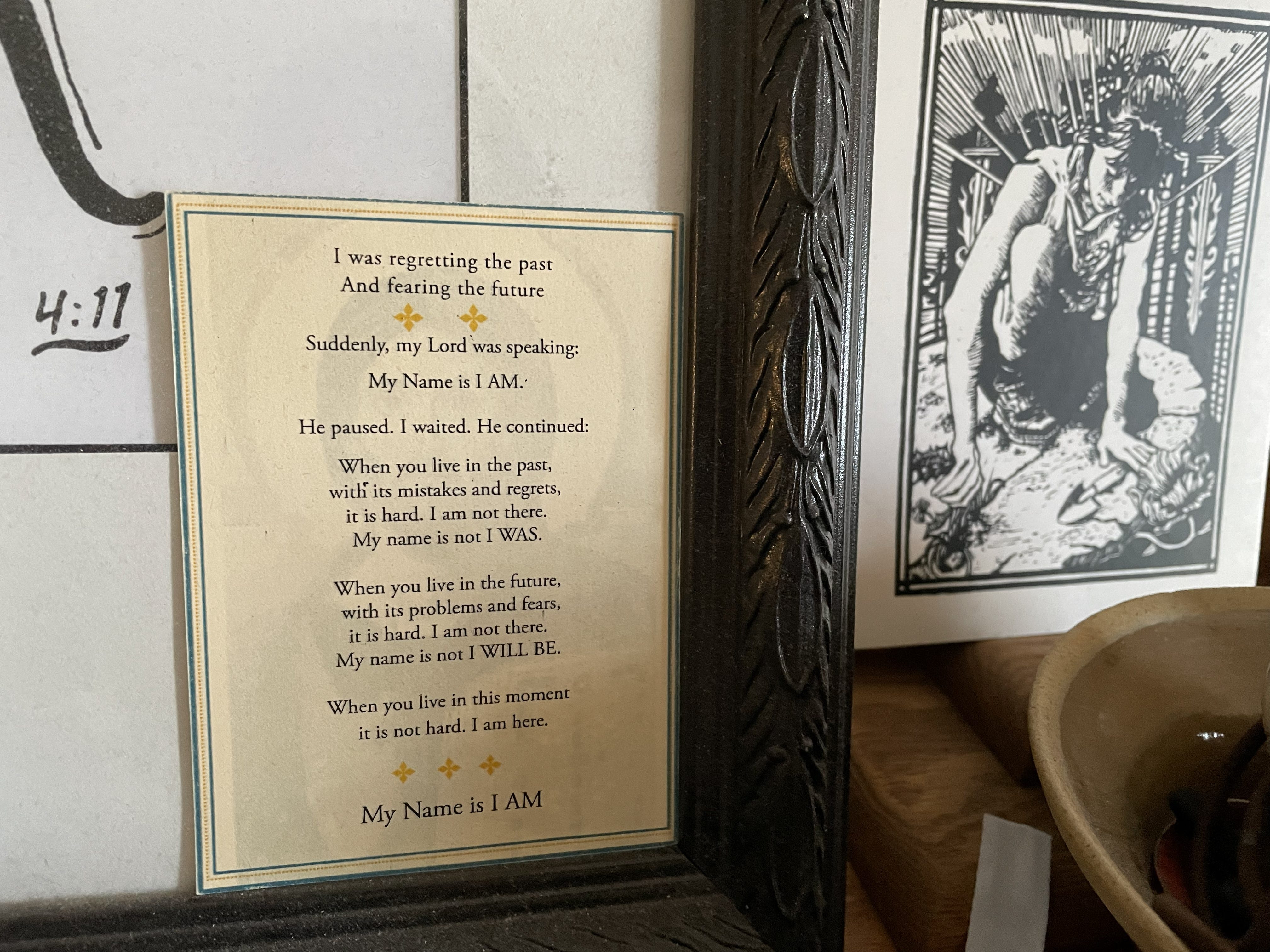
There’s a little card I placed on my dresser a long time ago, although I don’t remember where I got it. I set it there so I had a daily opportunity to read the poem written on it:
I was regretting the past and fearing the future.
Suddenly, my Lord was speaking:
My Name is I AM.He paused. I waited. He continued:
When you live in the past,
With its mistakes and regrets,
It is hard. I am not there.My name is not I WAS.
When you live in the future,
With its problems and fears,
It is hard. I am not there.
My name is not I WILL BE.When you live in this moment,
It is not hard. I am here.
My Name is I AM.
Here in that “I AM” of the present, I am not married. But I am also not unmarried. I am becoming, and I suspect that will remain true whether I remain single or not.
Caveat that I’ve had a better experience when the groups are more organized as a community for young professionals/young-ish adults than the ones explicitly “for singles.”
Here at least, I’m talking about where fulfillment means “getting the thing you want,” and setting aside for a moment that a desire can be met or fulfilled differently than how we’re expecting.
Credit to Trevor Sides for that phrase